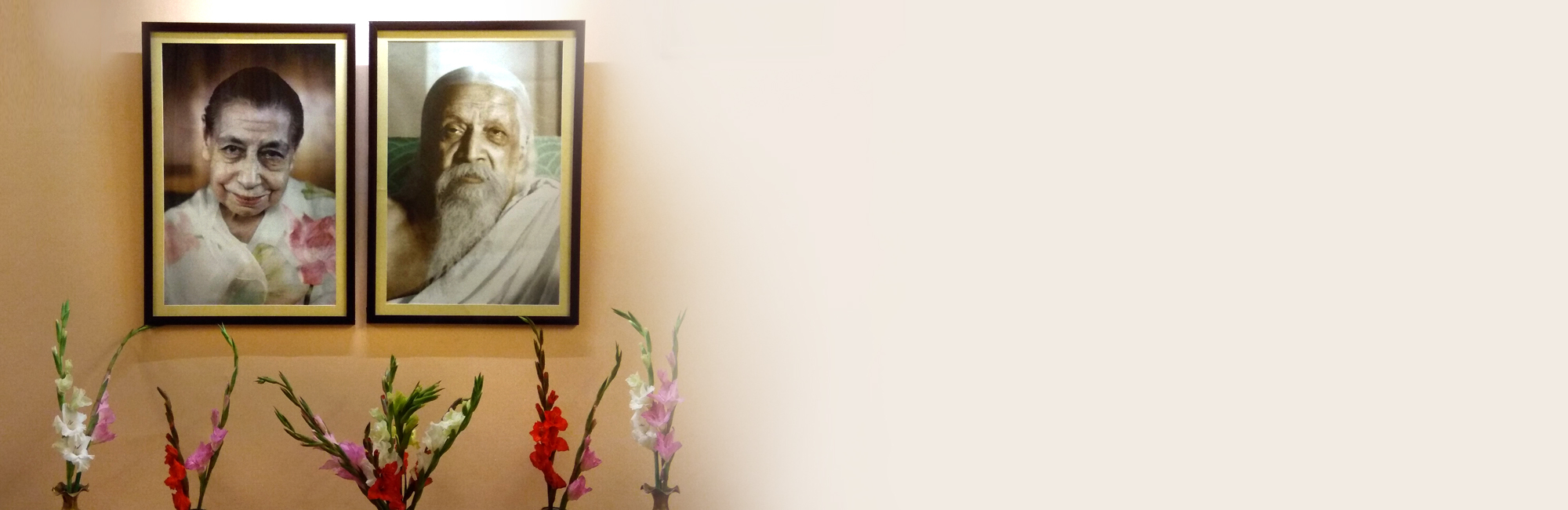
The foundation of the educational thoughts followed at Mirraloke lies in the vision laid down by Sri Aurobindo and The Mother.

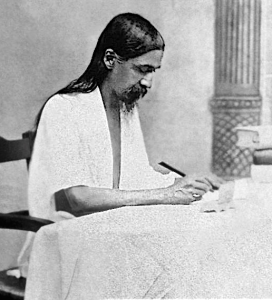
In his seminal essays on education, published in the Karmayogin in 1910 under the title A System of National Education, Sri Aurobindo outlined three fundamental principles:

  1. “Nothing can be taught.”
    True learning comes from within. Every child carries innate potential, and the role of the teacher is not to impose information, but to act as a guide and facilitator, helping the student awaken and unfold what lies within.
  2. “The mind has to be consulted in its own growth.”
    Education must be personalized. Each child should be allowed to learn in a way that respects their unique nature (swabhava) and inner calling (swadharma). This principle challenges the standard practice of moulding all students into a uniform model and emphasizes learning at one’s own pace and style.
  3. “Learning must move from near to far.”
    A child should begin by exploring and understanding their immediate surroundings, gradually expanding that awareness to the wider world. This approach ensures a natural and relatable progression of knowledge.

Sri Aurobindo also emphasized that education must not reduce itself to the mere accumulation of information. Instead, it should focus on the training of the senses, and the cultivation of reasoning, observation, and discernment. The goal is to equip learners with the tools to acquire knowledge independently and meaningfully.

The ultimate aim of education, as envisioned by Sri Aurobindo and The Mother, is the integral development of the individual—encompassing the physical, mental, vital, psychic, and spiritual aspects of being. It is about nurturing a sound mind in a healthy, supple body, sharpening the senses in harmony with the rhythms of nature, fostering emotional balance, and developing refined aesthetic sensibilities. Such education encourages an appreciation for what is noble, beautiful, and true, while helping the learner remain connected to the Divine Presence within.